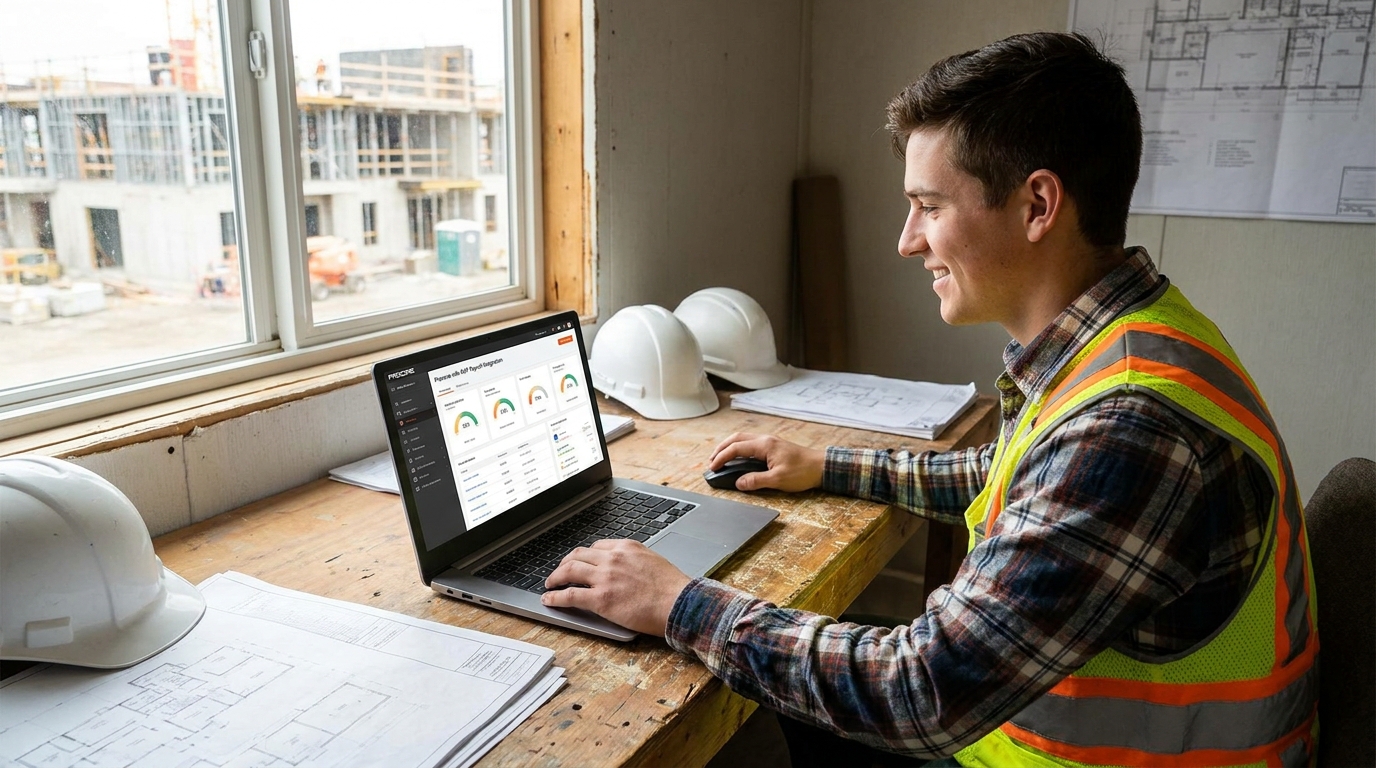
Construction accounting software is specialized financial technology designed to track profitability on a per-project basis (job costing) rather than just measuring overall corporate health. Unlike generic accounting tools, it handles industry-specific financial mechanics like AIA progress billing, retainage tracking, certified payroll, and Work in Progress (WIP) reporting.
Thank you for reading this post, don't forget to subscribe!Thank you for reading this post, don't forget to subscribe!Top Construction Accounting Software Platforms
| Software | Best For | Key Differentiator | Pricing Model |
|---|---|---|---|
| Foundation | Mid-sized to large trade contractors | Built strictly for construction; unmatched certified payroll & prevailing wage features. | Quote-based |
| Sage 100 Contractor | Growing residential & commercial firms | Bridges the gap between basic accounting and enterprise ERP. | Quote-based |
| QuickBooks Enterprise (Contractor) | Small to mid-sized general contractors | Familiar UI with added construction features like job costing and change orders. | Monthly subscription |
| CMiC | Enterprise-level construction firms | Single-database unified ERP covering financials and heavy field operations. | Custom enterprise |
| Jonas Premier | Cloud-based general contractors | Strong automated WIP reporting and modern cloud infrastructure. | Monthly + Implementation |
Why Generic Accounting Software Fails in Construction
Standard accounting platforms are built on a general ledger system that tracks income and expenses across a set time period. Construction accounting is fundamentally different because it operates on decentralized, project-centric financial lifecycles.
- Job Costing vs. General Ledger: Construction firms must know exactly how much they are spending on specific labor, materials, and subcontractors for a single job phase. General software lumps these expenses together, obscuring which projects are actually profitable.
- Retainage Tracking: Construction clients often hold back 5% to 10% of a payment until project completion. Specialized software automatically segregates this accounts receivable balance so you do not pay taxes on uncollected retainage prematurely.
- AIA Billing: Generating G702 and G703 progress billing documents manually in spreadsheets is highly error-prone. Construction accounting tools auto-generate these directly from the live project budget and completion percentage.
Core Features Every Contractor Needs
When evaluating a new platform, ensure it natively supports the following operational requirements without requiring third-party workarounds:
- Work in Progress (WIP) Reporting: Instantly identifies if a project is over-billed or under-billed relative to its actual field completion percentage, preventing cash flow illusions.
- Certified Payroll & Prevailing Wage: Automatically generates required federal and state compliance reports (like WH-347) based on location and specific trade codes.
- Change Order Management: Links field-approved change orders directly to the revised budget, automatically updating the accounts receivable ledger and project scope.
- Equipment Costing: Allocates the depreciation, fuel, and maintenance costs of heavy machinery directly to the specific job sites where they are deployed, rather than hiding them in general overhead.
Selecting the right system depends entirely on your company's revenue volume, trade complexity, and labor model. A small specialty subcontractor can thrive on QuickBooks Contractor, while a multi-state commercial developer requires the robust WIP and compliance tracking of Foundation, Sage, or CMiC.
CHECK OUR LATEST REVIEWS
Construction Accounting Software Reddit Threads Unpack: How Contractors Choose the Right Financial Stack
Best Construction Accounting Software
What’s the Best Construction Software That Integrates with ADP Payroll
Construction Payroll: What It Is and How It Differs From Standard Payroll
Best Job Costing Software for Construction
Best Construction Billing Software
Best Construction Time Tracking Software