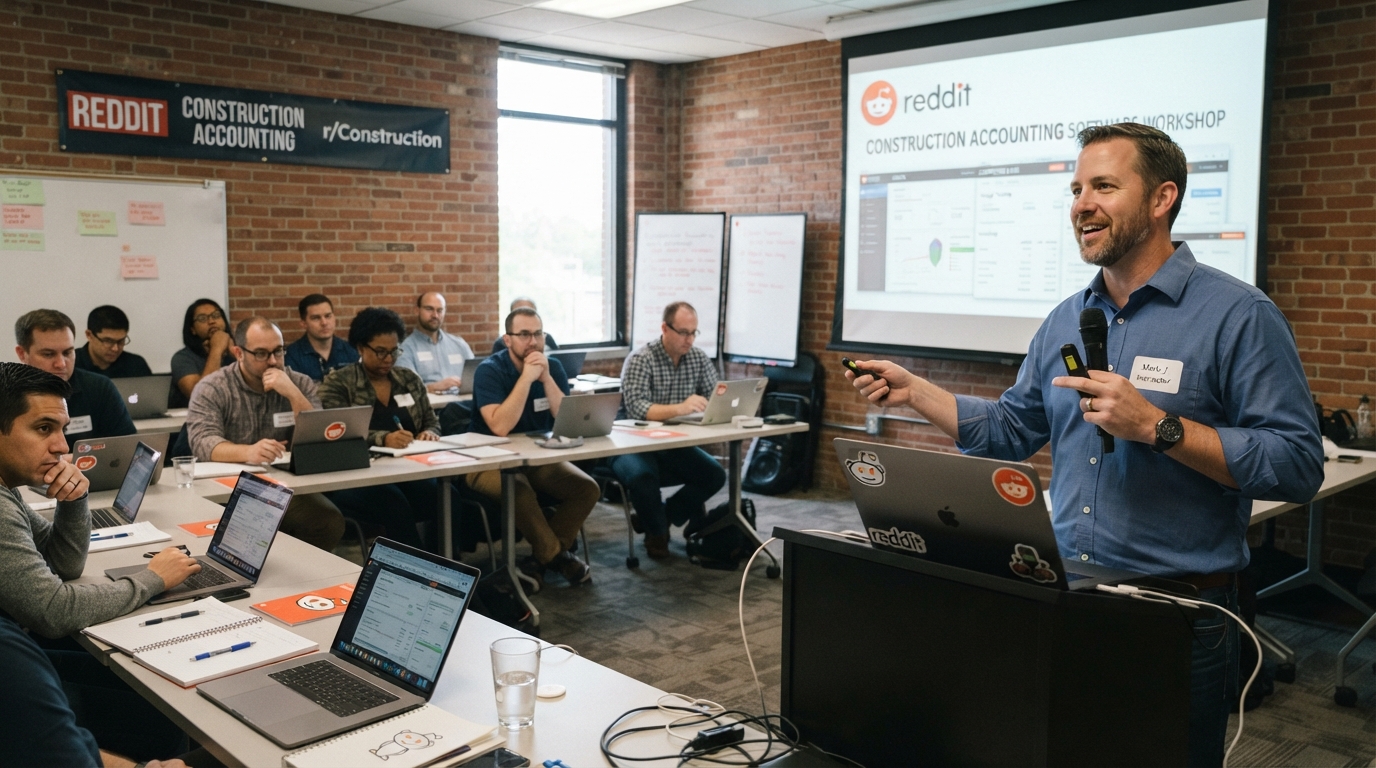
Construction Accounting Software Reddit : Some of the most typical queries in construction finance in the current world include whether the generic bookkeeping software is enough or a specific software solution must be used. The simple answer to that query is that generic tools never work when there is an increase in project complexity.
Thank you for reading this post, don't forget to subscribe!Thank you for reading this post, don't forget to subscribe!It can be observed from the analysis of construction accounting software in the Reddit community that there is unanimous agreement among trade contractors, builders, and project accountants that generic accounting solutions do not have the native feature to perform WIP tracking, certified payroll, and job costing at the unit level.
Construction Payroll Software Directory
This misconception may arise from the tendency of many business owners to equate specialized software for construction finance to standard off-the-shelf programs such as basic versions of QuickBooks or customized Excel spreadsheets on the assumption that they do the same basic thing since they record revenue and expenses. Although they both fulfill the broad objective of keeping financial records, they go about it in a completely different way.
Through the use of an off-the-shelf accounting program, transactions are classified into static account categories in the chart of accounts that do not consider the dynamic nature of purchase orders committed, retainages of subcontractors, and work completed at the site.
An Integrated Construction Accounting System works with a process that involves a continuous flow of information from the site, the office, and even from the executive suites. Instead of doing end-of-the-month data entry, the field supervisors record their labor hours, equipment time, and material receipts right into the application.
This is done in conjunction with the field input, where the system calculates the labor burden, prevailing wages per state and even updates the job-cost register immediately. With receipt of materials and payments from subcontractors, the system checks for any discrepancies in the estimate.
One of the most notable features of construction financial software includes dynamic work in progress (WIP) schedules and detailed job costing reports. In the field of construction, cash flow-based revenue recognition can be very deceiving due to the fact that cash flows seldom coincide with actual progress.
An effective WIP schedule provides a continuous comparison of recognized revenues with actual incurred costs and estimated future costs. As a result, such a tool allows for pinpointing all cases of over- and under-billing.
Such a feature provides executives and surety bond underwriters with the indisputable view of the company's financial standing and the profitability of current projects. Another important aspect of specialized financial systems involves the automation of the management of certified payroll and complicated labor burden calculations.
Governmental projects, public works, and projects with unions require strict compliance with prevailing wage requirements and certain report formats (WH-347). Conventional accounting programs require extensive manual calculations to take into account fringe benefit allocation, union contributions, and worker's compensation codes. Specialized platforms automate all these actions, allowing users to use fully burdened labor costs in cost codes with reports at a single click.
Another key benefit provided by specific construction software includes financial transparency and effective change order management. As a rule, a construction project is a dynamic environment with changing scopes of works, unanticipated site conditions, and changes in the design.
Financial solutions identify pending, approved, and rejected change orders, as well as their financial implications relative to customer contract value and subcontractor budget. Such a system will help avoid any unbilled work and eliminate silent losses due to changes in the prices of materials.
Modern cloud-based construction software also eliminates the age-old separation of job-site activities from back-office accounting. Modern systems provide user-friendly interfaces that facilitate daily logging, time clocking, and purchase order generation without making field superintendents deal with accounting menu.
In this way, it is possible for the project manager to follow up on the planned spending compared to the actual expenses, while bookkeepers can use such information for billing immediately, without having to wait for any additional documents.
Construction specific accounting software has become essential to current project delivery processes, such as CM at Risk, PDB and IPD. These collaboration-based project delivery processes require openness and transparency, collaborative risk management, and quick financial reporting between all stakeholders in a project.
The construction financial software system helps to provide the auditability and financial tracking necessary for managing shared savings programs and contingency funds. Through the integration of financial information among different stakeholders, construction accounting software helps to tie the accounting process to the goal of collaborative construction.
From my experience, having a specialized enterprise level accounting system, like Sage 100 Contractor, Foundation or Acumatica, is especially critical for medium to large commercial enterprises that work with complicated multi-phase projects.
The high density residential constructions, infrastructure constructions, commercial construction, and multi-subcontractor capital projects have too many different factors that cannot be managed without a specialized accounting tool. The complicated retention management, joint check management, equipment depreciation management, and multi-state withholding calculation require an enterprise grade financial software as a risk management tool.
On the other hand, boutique residential remodeling contractors or smaller trade subcontractors with smaller teams have no trouble operating efficiently with a simple tech stack. In case of a small team performing simple residential projects, using a simple accounting program along with field time tracking and project management add-ons works just fine, not to mention excessive administration that comes with high-end construction ERPs. If the scope of the project is clear-cut and there is not much volume of transactions involved, being lean is the way to go.
The most common misconception about the use of accounting software for construction that can be found in construction accounting software reddit discussions is the notion that buying an expensive solution will solve all the issues with internal bookkeeping process in place. The software itself acts as a tool that multiplies the internal processes. Using a complicated financial software tool together with a chaotic data entry or lack of training for personnel can lead to nothing but chaos.
In the end, whether a company goes for an enterprise-wide construction ERP system or goes for a combination of general accounting software along with field management software, choosing the right system is based on assessing the operations size of the business.
Construction accounting software can actually be seen as the core of turning field data into financial intelligence in numerous respects. Contractors will be able to get the kind of visibility in their operations that allows them to preserve margins at the field level, while executives will maintain the ability to control finances from a macro perspective to obtain bonding and grow their company sustainably.
In light of the challenges that economic volatility, changing material costs, and labor shortages pose for the construction industry, becoming adept at finance technologies has become an essential factor in ensuring long-term survival.
Using strong construction accounting solutions allows the builder to be able to remove any blind spots, improve the cash flow, and work with complex contracts without having to worry. In order to survive in this modern world, for today’s advanced property developers and contractors, it has become as important to build a strong financial system behind the scenes as to construct a strong concrete structure.