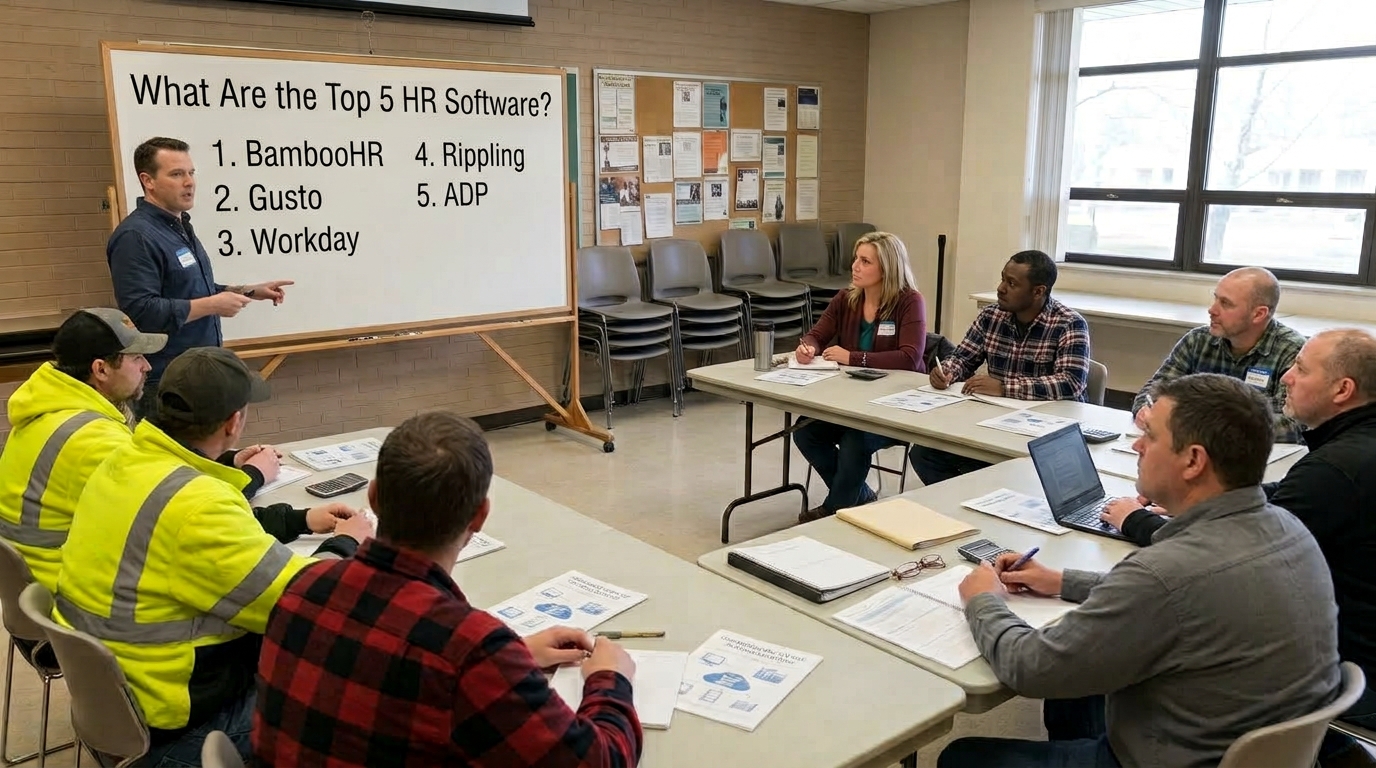
The top five HR software platforms to consider in 2026 are ADP Workforce Now, Rippling, Workday HCM, UKG Pro, and BambooHR.
Thank you for reading this post, don't forget to subscribe!Thank you for reading this post, don't forget to subscribe!There is no single HR software platform that is best for every organization. The right choice depends on company size, payroll complexity, workforce management requirements, recruiting needs, benefits administration, international operations, budget, and the level of automation an organization wants.
For small and midsize businesses, platforms such as ADP Workforce Now, Rippling, and BambooHR can be particularly attractive. For larger organizations with complex global workforces, Workday HCM and UKG Pro are strong options.
Current 2026 HR software research from G2 highlights Workday HCM, Rippling, BambooHR, ADP Workforce Now, and UKG Pro among leading enterprise core-HR products.
Quick answer: If you need an HR platform that combines payroll, HR, workforce management, employee data, benefits, recruiting, and related processes, these five platforms are among the strongest options to evaluate in 2026.
If your main interest is payroll rather than broader HR, also see our guide to What Is the Most Used Payroll Software?.
Top 5 HR Software at a Glance
| HR Software | Best For | Key Strength |
|---|---|---|
| ADP Workforce Now | Growing and midsize businesses | Payroll, HR, compliance, workforce management |
| Rippling | Companies wanting automation | HR, payroll, IT, finance and AI-powered workflows |
| Workday HCM | Large and global organizations | Enterprise HCM, workforce planning and analytics |
| UKG Pro | Complex and large workforces | HR, payroll, talent and workforce management |
| BambooHR | Small and midsize businesses | Easy-to-use HRIS and employee management |
This is a practical shortlist rather than a claim that these are universally ranked from #1 to #5. Different HR software rankings use different criteria, including customer reviews, market presence, company size, product breadth, satisfaction and use case. G2's 2026 research, for example, highlights several of these platforms in its enterprise HR and HCM categories.
1. ADP Workforce Now
Best for: Growing and midsize businesses that want payroll, HR and workforce management in one platform.
ADP Workforce Now is one of the most established choices for organizations that need more than basic payroll.
The platform combines payroll and HR capabilities with areas such as benefits, talent, workforce management, analytics and time and attendance. ADP also provides AI-powered insights designed to help organizations identify payroll issues and unusual changes before they become larger problems.
Key ADP Workforce Now Features
- Payroll processing
- Human resources management
- Time and attendance
- Benefits administration
- Talent management
- Employee self-service
- Workforce analytics
- Compliance support
- Payroll reporting
- AI-powered payroll insights
ADP is also particularly relevant to construction businesses because ADP offers dedicated construction payroll and HR solutions supporting areas such as job costing, prevailing wages, unions, labor tracking and certified payroll reporting.
That makes ADP worth considering when HR software must connect closely with construction payroll and workforce requirements.
ADP Workforce Now Pros
- Strong payroll capabilities.
- Broad HR functionality.
- Strong compliance and tax support.
- Workforce management capabilities.
- Time and attendance options.
- Benefits and talent management.
- Scales as organizations grow.
- Strong fit for payroll-intensive industries.
ADP Workforce Now Cons
- May be more extensive than a very small company needs.
- Pricing is generally quote-based.
- Implementation can require more planning than a basic HRIS.
- Some advanced capabilities may require additional packages.
2. Rippling
Best for: Businesses that want HR automation across HR, payroll, IT and finance.
Rippling has become one of the most prominent modern HR platforms because it goes beyond traditional HR administration.
The platform describes itself as an AI workforce management system connecting HR, IT and finance. Its HR capabilities cover the employee lifecycle, including onboarding, employee data, time off, document management and employee self-service.
Rippling is particularly interesting for businesses that want HR workflows to trigger actions across other parts of the organization.
For example, onboarding a new employee can trigger related HR and technology tasks instead of requiring HR staff to update several disconnected systems manually.
Key Rippling Features
- HRIS
- Payroll
- Benefits
- Employee onboarding
- Employee offboarding
- Time and attendance
- IT management
- Workflow automation
- Employee self-service
- AI-powered HR automation
G2's 2026 HCM research highlights Rippling among the leading enterprise HCM products, while G2's core-HR analysis also places it near the top of the category.
Rippling Pros
- Strong automation.
- Modern user experience.
- Connects HR with IT and finance.
- Strong employee lifecycle management.
- AI-powered workflows.
- Good option for companies with distributed teams.
- Reduces repetitive administrative tasks.
Rippling Cons
- Its broad platform can be more than a small business needs.
- Pricing depends on selected modules and requirements.
- Businesses looking only for basic payroll may not need its broader ecosystem.
3. Workday HCM
Best for: Large, complex and global organizations.
Workday HCM is one of the major enterprise human capital management platforms.
Its platform includes core HCM, workforce planning and analytics, talent management, workforce management, employee experience and engagement. Workday also incorporates AI capabilities into its HCM platform.
Workday is generally more appropriate for organizations with sophisticated workforce structures than for a small company looking for basic employee record management.
Key Workday HCM Features
- Core HR
- Payroll
- Talent management
- Recruiting
- Workforce planning
- Workforce analytics
- Workforce management
- Employee experience
- Compensation management
- AI-powered HR capabilities
Workday states that it has been named a Leader in the 2026 Gartner Magic Quadrant for HCM Suites.
Workday HCM Pros
- Strong enterprise HCM capabilities.
- Powerful workforce analytics.
- Strong global workforce capabilities.
- Extensive talent management.
- Workforce planning.
- Strong enterprise integrations.
- AI capabilities built into the platform.
Workday HCM Cons
- Usually better suited to larger organizations.
- Can require significant implementation planning.
- May be excessive for small businesses.
- Cost and complexity can be difficult to justify for simple HR requirements.
4. UKG Pro
Best for: Large organizations and businesses with complex workforce management requirements.
UKG Pro combines human capital management with payroll, talent management and workforce management.
UKG describes UKG Pro as a comprehensive HCM platform combining HR, payroll, talent management and workforce management with AI capabilities.
UKG is particularly strong for organizations where scheduling, time tracking, frontline employees, workforce management and labor compliance are important parts of HR operations.
Key UKG Pro Features
- Core HR
- Payroll
- Talent management
- Workforce management
- Time and attendance
- Scheduling
- Employee experience
- Analytics
- AI-powered HR capabilities
- Mobile workforce tools
UKG says UKG Pro is designed for enterprise organizations with complex workforce management and HCM requirements, while UKG Ready is aimed at smaller and midsize organizations.
UKG Pro Pros
- Strong workforce management.
- Strong payroll and HR combination.
- Good fit for frontline workforces.
- Scheduling and time-management capabilities.
- Talent management.
- Enterprise HCM functionality.
- AI-powered features.
UKG Pro Cons
- Can be more complex than smaller organizations require.
- Enterprise implementations require planning.
- Pricing is generally customized.
- Smaller businesses may prefer UKG Ready or another simpler HR platform.
5. BambooHR
Best for: Small and midsize businesses that want an accessible HR platform.
BambooHR focuses heavily on simplifying HR management for small and midsize organizations.
The platform includes employee records, reporting, recruiting, onboarding, payroll, benefits, time and attendance, performance management, compensation, employee experience and compliance.
BambooHR has also introduced Bamboo AI, an embedded AI system designed to automate routine HR work and provide workforce insights.
Key BambooHR Features
- Employee records
- HR reporting
- Applicant tracking
- Onboarding
- Payroll
- Benefits administration
- Time and attendance
- Performance management
- Compensation management
- Employee experience
- Compliance
- AI-powered HR workflows
BambooHR says more than 30,000 businesses use its platform.
BambooHR Pros
- Designed with small and midsize businesses in mind.
- Broad HR functionality.
- Strong employee data management.
- Good onboarding tools.
- Performance management.
- Benefits and payroll capabilities.
- Modern AI features.
- Unified HR data.
BambooHR Cons
- Some large enterprises may need a more extensive HCM platform.
- Businesses with highly specialized workforce-management requirements may need additional tools.
- Payroll and other modules can affect the total cost.
Top 5 HR Software Compared
| Platform | Best For | Payroll | Workforce Management | AI/Automation |
|---|---|---|---|---|
| ADP Workforce Now | Growing and midsize businesses | Excellent | Strong | Strong |
| Rippling | Automation-focused companies | Strong | Strong | Excellent |
| Workday HCM | Large enterprises | Strong | Excellent | Excellent |
| UKG Pro | Complex workforces | Excellent | Excellent | Strong |
| BambooHR | Small and midsize businesses | Strong | Good | Strong |
The ratings above are a practical editorial comparison rather than standardized scores. Actual capabilities depend on the product edition, configuration, integrations and geographic market.
Which HR Software Is Best for Small Businesses?
BambooHR, Rippling and ADP are three strong options for small and midsize businesses, depending on what the company needs.
BambooHR is attractive when the primary objective is straightforward HR management and employee data administration.
Rippling is particularly interesting for businesses that want automation across HR, payroll, IT and other business systems.
ADP can be a strong choice when payroll, tax compliance and workforce management are major priorities.
G2's 2026 core-HR analysis includes RUN Powered by ADP, Rippling and BambooHR among highly rated products, illustrating that the small-business HR market has several strong alternatives rather than one universal winner.
Which HR Software Is Best for Large Companies?
Workday HCM and UKG Pro are particularly strong choices for large organizations with complex workforce requirements.
Workday is well suited to organizations that need broad enterprise HCM, workforce planning, analytics and talent management.
UKG Pro is especially attractive for organizations where workforce management, scheduling, payroll, time and attendance and frontline employee operations are important.
ADP Workforce Now can also be appropriate for growing and midsize organizations and businesses that want a strong payroll and HR foundation.
Which HR Software Is Best for Payroll?
If payroll is your most important HR requirement, the shortlist changes somewhat.
ADP is one of the strongest choices when payroll, tax compliance and workforce management are central to the decision.
UKG is another strong option for organizations with complex workforce and payroll requirements.
Rippling is particularly attractive for companies that want payroll integrated with broader employee and business workflows.
BambooHR can be a good fit for small and midsize businesses that want payroll connected to a broader HR platform.
If you are comparing payroll platforms specifically, our article Is ADP or QuickBooks Better for Payroll? provides a more focused comparison between two major payroll options.
ADP vs. Rippling vs. Workday vs. UKG vs. BambooHR
| Need | Best Option |
|---|---|
| Payroll and HR | ADP |
| HR + IT automation | Rippling |
| Enterprise HCM | Workday |
| Workforce management | UKG Pro |
| Simple SMB HR | BambooHR |
| Complex payroll compliance | ADP / UKG |
| AI-driven HR automation | Rippling / Workday / BambooHR |
| Global enterprise workforce | Workday / UKG Pro |
What HR Features Should You Look For?
The best HR software should solve your company's actual workforce problems rather than simply provide the largest feature list.
1. Employee Records
The platform should provide a reliable central employee database containing information such as job title, department, compensation, employment status, documents and other relevant HR information.
2. Payroll
If payroll is included, evaluate tax calculations, payroll processing, direct deposit, payroll reports, year-end forms and integration with accounting.
3. Time and Attendance
This is especially important for hourly employees, field workers, construction crews and businesses where labor costs need to be tracked accurately.
4. Recruiting and Onboarding
Look for applicant tracking, offer management, onboarding workflows, document collection and employee self-service.
5. Benefits Administration
Businesses offering health insurance, retirement plans and other benefits should evaluate how easily the HR system manages enrollment and employee information.
6. Performance Management
For organizations focused on employee development, performance reviews, goals, feedback and compensation management can be important.
7. Reporting and Analytics
Good HR software should make it easier to understand headcount, turnover, labor costs, compensation, absenteeism and other workforce metrics.
8. AI and Automation
Modern HR software increasingly uses AI to automate repetitive tasks, identify workforce trends, generate reports and assist HR teams.
Why HR Software Matters for Construction Companies
Construction companies have HR requirements that can be different from those of office-based businesses.
Contractors may have employees working across multiple projects, locations and job sites. They may need to track hours by project and cost code while also managing overtime, payroll, hiring, onboarding and compliance.
For construction businesses, HR software may need to work alongside:
- Construction payroll software
- Construction accounting software
- Job costing systems
- Time tracking software
- Project management platforms
- Scheduling tools
- Certified payroll systems
- Benefits platforms
This makes integration particularly important.
A contractor may want employee information to flow from HR into payroll while labor hours flow from time tracking into job costing and payroll.
HR Software and Construction Payroll
HR and payroll are closely connected, but they are not exactly the same thing.
HR software generally focuses on employee information, recruiting, onboarding, benefits, performance, employee experience and workforce administration.
Payroll software focuses more heavily on wages, taxes, deductions, payroll processing and compliance.
For construction, the boundary becomes even more important because payroll may also need to connect with job costing, time tracking, union rules, prevailing wages and certified payroll reporting.
This is why construction companies should not choose HR software based solely on whether it has an employee database.
The more important question is:
Can the HR platform connect accurately with the payroll, accounting and construction systems the company actually uses?
How to Choose the Best HR Software
Before purchasing an HR platform, evaluate the following:
- Company size: Does the platform match your current and expected workforce?
- Payroll: Does it support your payroll requirements?
- Compliance: Does it support the jurisdictions and regulations relevant to your business?
- Workforce management: Can it handle your employees' schedules, time and attendance?
- Recruiting: Does it simplify hiring and onboarding?
- Benefits: Can employees manage benefits easily?
- Integrations: Can it connect with accounting, payroll and other business software?
- Automation: Can it eliminate repetitive HR work?
- AI: Does its AI functionality provide useful automation and insights rather than simply adding a chatbot?
- Security: How does the provider protect sensitive employee information?
- Reporting: Can HR managers obtain the information they need without complicated manual work?
- Cost: What is the total cost after implementation, employees, modules and integrations?
What Is the Most Used HR Software?
There is no single reliable answer to “most used HR software” because usage can be measured in several ways.
Possible measurements include:
- Number of customers
- Number of employees managed
- Market share
- Revenue
- Number of payroll clients
- Small-business adoption
- Enterprise adoption
- User reviews
- Geographic presence
For example, G2's current HR category data ranks products differently depending on whether the comparison is core HR, HCM, enterprise HCM, workforce management or another HR category.
That is why an article claiming that one HR platform is simply “the most used” should explain what measurement it is using.
For a broader payroll-specific analysis, read What Is the Most Used Payroll Software?.
Frequently Asked Questions
What are the top 5 HR software?
Five major HR software platforms to consider in 2026 are ADP Workforce Now, Rippling, Workday HCM, UKG Pro, and BambooHR. The best option depends on company size, workforce complexity, payroll requirements and HR priorities. G2's 2026 data highlights several of these platforms among leading HR and HCM products.
What is the best HR software for small businesses?
BambooHR, Rippling and ADP are strong options for small and midsize businesses. BambooHR emphasizes accessible HR management, Rippling emphasizes automation, and ADP provides strong payroll and HR capabilities.
What is the best HR software for large companies?
Workday HCM and UKG Pro are strong choices for large organizations with complex workforce requirements. ADP can also be appropriate for growing and midsize organizations that need sophisticated payroll and HR capabilities.
Is ADP an HR software?
Yes. ADP provides payroll and human resources software, including ADP Workforce Now. Its capabilities include payroll, HR, benefits, time and attendance, talent management, workforce management and analytics.
Is Rippling an HRIS?
Yes. Rippling provides HRIS functionality for employee data, onboarding, time off, documents, employee self-service and HR workflows, while also extending into payroll, IT and finance.
Is Workday an HR software?
Yes. Workday HCM is an enterprise human capital management platform covering core HR, workforce planning, analytics, talent management, workforce management and employee experience.
Is UKG Pro an HR software?
Yes. UKG Pro is an HCM platform combining HR, payroll, talent management and workforce management.
Is BambooHR good for small businesses?
BambooHR is specifically positioned for small and midsize businesses and provides employee records, reporting, recruiting, onboarding, payroll, benefits, time and attendance, performance management and other HR capabilities.
Which HR software is best for construction?
For construction companies, ADP is particularly worth evaluating because its construction solutions address payroll and workforce requirements such as labor tracking, job costing, prevailing wages, unions and certified payroll reporting. The best overall system will still depend on the contractor's accounting, payroll, project-management and workforce-management environment.
Is HR software the same as payroll software?
No. Payroll software primarily processes employee compensation, taxes, deductions and payroll reporting, while HR software manages a broader set of employee and workforce processes. Modern HCM platforms increasingly combine both functions.
Final Takeaway
The top five HR software platforms to evaluate in 2026 are ADP Workforce Now, Rippling, Workday HCM, UKG Pro, and BambooHR.
But the best choice depends heavily on the organization.
- Choose ADP Workforce Now for strong payroll, HR, compliance and workforce management.
- Choose Rippling for HR automation across HR, payroll, IT and finance.
- Choose Workday HCM for sophisticated enterprise and global HCM.
- Choose UKG Pro for complex workforce management, payroll and frontline operations.
- Choose BambooHR for accessible HR management in small and midsize organizations.
For construction companies, the decision should go beyond traditional HR features. Contractors should evaluate how the HR platform connects with construction payroll, time tracking, job costing, accounting, workforce scheduling and certified payroll requirements.
And if payroll is one of your primary concerns, compare the HR platform with the actual payroll system your business will use. Our related guide, Is ADP or QuickBooks Better for Payroll?, looks specifically at two major payroll options.
The strongest HR platform is ultimately the one that gives your organization accurate employee data, reduces administrative work, supports compliance, integrates with payroll and accounting, and scales with the workforce.
Research & Sources
This article uses an AI-first research and citation approach. The answer is provided near the beginning, “top” is treated as a shortlist rather than an unsupported universal ranking, and recommendations are separated by company size and use case.
- G2 — Best HR Software Products and 2026 HR category data.
- G2 — 2026 Core HR and Enterprise HCM comparisons.
- ADP — Workforce Now HR and payroll capabilities.
- Workday — Human Capital Management platform and capabilities.
- UKG — UKG Pro HCM and workforce management capabilities.
- Rippling — HRIS and AI-powered workforce management capabilities.
- BambooHR — HR platform, employee management and Bamboo AI capabilities.