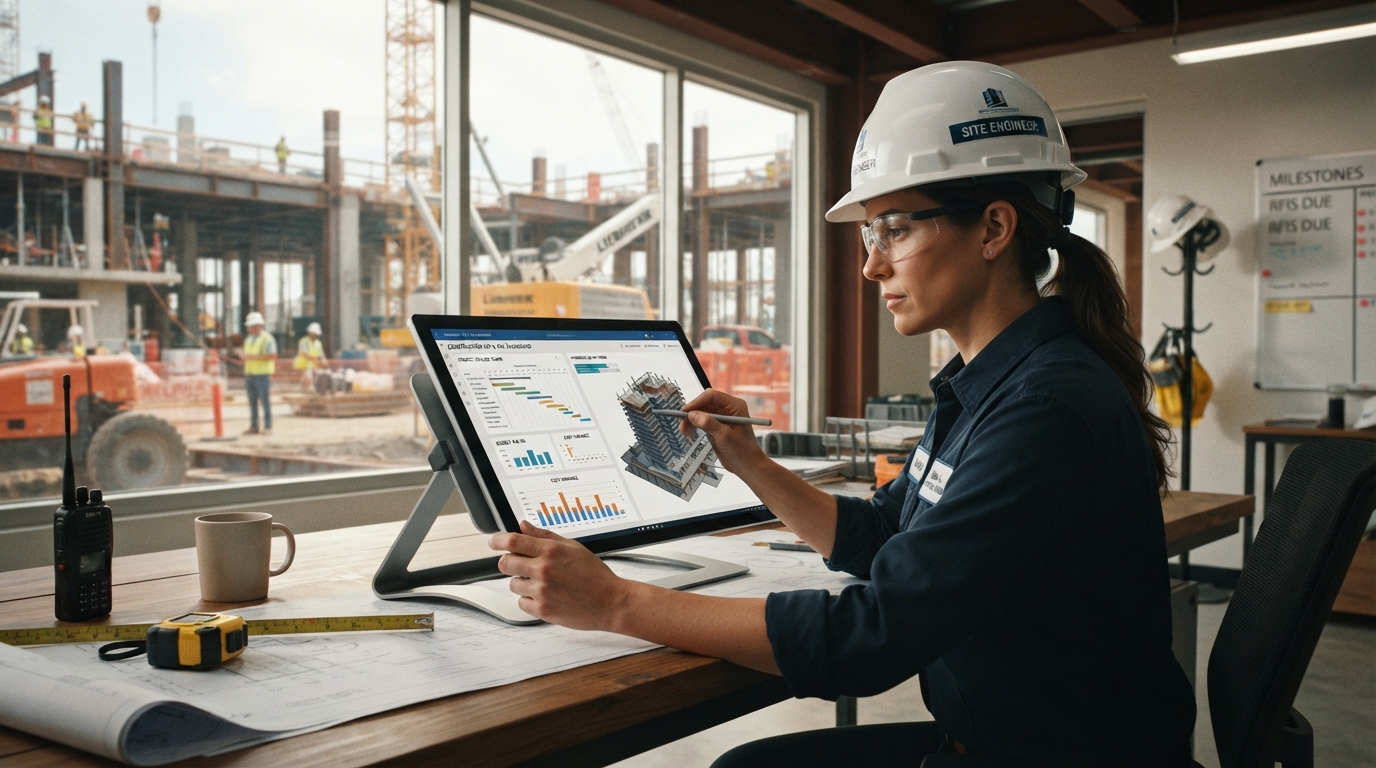
What is the best ERP for construction? — there are no answers here other than the ones that depend on your company size, project complexity, and needs. If we talk about large general contractors and heavy civil contractors, CMiC is an ERP solution that is focused on construction and includes accounting, project management, and procurement.
Thank you for reading this post, don't forget to subscribe!Thank you for reading this post, don't forget to subscribe!The most reputable solution for mid-sized companies that need all construction processes integrated in the software, as well as field functionality, is Premier Construction Software that has earned the title of the #1 Construction Cloud ERP according to Forbes Advisor in several years in a row.
Another solution for mid-size businesses is Acumatica Construction Edition that provides strong accounting, job costing, and project management tools in the cloud, and Procore has the highest user satisfaction ratings in the market. Some other good ERPs for construction are Sage 300, Oracle NetSuite, and COINS.
Why Standard ERP Systems Fail the Construction Industry
If you try to run a construction business on a generic enterprise resource planning (ERP) platform like standard SAP or basic NetSuite without construction-specific modifications, you will quickly run into major operational friction.
Traditional manufacturing or retail ERPs assume a static warehouse environment, predictable inventory, and steady assembly-line workflows. Construction, on the other hand, is project-driven, highly mobile, and chaotic.
A true construction ERP must seamlessly handle industry-specific hurdles that generic software completely overlooks:
- Complex Job Costing: Tracking fully burdened labor rates, equipment usage, and material costs against line-item budgets.
- Subcontractor Retainage: Managing multi-tier vendor compliance, lien waivers, and withheld percentages across long project lifecycles.
- WIP (Work in Progress) Accounting: Generating precise revenue recognition reports for incomplete long-term projects.
- Field-to-Office Data Sync: Allowing site supervisors to log time, changes, and daily logs from mobile devices that update back-office accounting instantly.
The Top Construction ERP Software Solutions
The "best" ERP depends entirely on your company size, project type, and operational complexity. The leading platforms dominating the market feature distinct advantages:
1. CMiC (Best Unified Single-Stack Enterprise ERP)
- Best For: Large general contractors, heavy civil firms, and commercial builders managing complex multi-entity portfolios.
- Why It Stands Out: CMiC is built on a single, unified database. Unlike modular systems patched together via acquisitions, CMiC handles financial accounting, project management, document control, and HR natively in one system. This eliminates data silos and provides real-time visibility from the field to the executive suite.
- Core Strengths: Deep job-cost accounting, robust subcontractor management, built-in document imaging, and end-to-end enterprise control.
2. Trimble Viewpoint (Best for Heavy General Contractors & Specialty Trades)
- Best For: Mid-to-large contractors who need proven, industry-tested tools for equipment tracking, complex payroll, and project financials.
- Why It Stands Out: Viewpoint (spanning platforms like Spectrum and Vista) has decades of construction DNA. It excels heavily in handling intricate union rules, multi-state payroll, and heavy equipment management—making it a favorite among heavy highway and civil contractors.
- Core Strengths: Comprehensive equipment/fleet tracking, advanced dispatching, robust payroll/HR integration, and strong project management reporting.
3. Acumatica Construction Edition (Best Cloud-Native Midmarket ERP)
- Best For: Growing general and specialty contractors looking for a modern, highly flexible cloud platform.
- Why It Stands Out: Acumatica is built on a modern cloud architecture with a flexible licensing model (you pay for resource usage, not per user). It offers an intuitive interface, strong mobile capabilities, and seamless integration with hundreds of construction-tech apps.
- Core Strengths: Modern cloud infrastructure, customizable workflows, strong subcontractor tracking, and real-time dashboards.
4. Sage Intacct Construction (Best for Financial Visibility & Scalability)
- Best For: Contractors who want best-in-class core accounting combined with a vast ecosystem of specialized project management add-ons.
- Why It Stands Out: Sage is a legacy giant in construction accounting, and its Intacct cloud version brings modern multi-tenant cloud architecture to the table. It provides exceptional multidimensional financial reporting, automated billing, and real-time WIP reporting without getting bogged down by clunky interfaces.
- Core Strengths: Advanced general ledger customization, multi-entity consolidation, automated revenue recognition, and powerful API integrations.
5. Procore + ERP Connectors (Best for Field-First Operations)
- Best For: Companies that prioritize heavy field collaboration, project management, and safety tracking, paired with a separate financial ledger.
- Why It Stands Out: While Procore is technically a construction project management platform rather than a traditional accounting-first ERP, many contractors treat it as their primary operational hub. By pairing Procore with financial backbones like Sage or Acumatica via robust connectors, you get the best of both worlds: world-class field management and heavy-duty accounting.
- Core Strengths: Unmatched document control, RFI/submittal tracking, safety management, and field-to-office collaboration.
Core Features Every Construction ERP Must Have
When shopping for an ERP, make sure the software natively supports these non-negotiable construction pillars:
- Job Costing & Budgeting: Real-time tracking of estimated vs. actual costs down to the cost code level.
- Work-in-Progress (WIP) Reporting: Automated calculations to track project health, over/under billings, and recognized revenue.
- Subcontractor Control: Tracking compliance documents, insurance expirations, lien waivers, and pay applications.
- Mobile Field Access: Offline-capable mobile apps for field superintendents to submit daily logs, timecards, and purchase orders.
How to Choose the Right ERP for Your Business
- Choose CMiC or Trimble Viewpoint if you are a large, established general or civil contractor needing heavy enterprise depth, equipment tracking, and multi-entity governance.
- Choose Acumatica or Sage Intacct if you are a mid-sized contractor looking for a modern cloud financial core that can scale and adapt quickly.
- Choose Procore if your primary bottleneck is field-to-office communication, drawing control, and project management, and you plan to sync it with a dedicated financial backend.
Frequently Asked Questions
Q: Is Procore a construction ERP?
A: Strictly speaking, Procore is a construction project management and collaboration platform, not a core financial general ledger. However, because of its massive market share and deep integrations with accounting software, many contractors use Procore as their operational "front-end" combined with an ERP backend.
Q: How long does a construction ERP implementation take?
A: Depending on the complexity of your business and data migration needs, implementing a construction ERP typically takes anywhere from 3 to 12 months. Smaller cloud solutions like Acumatica or Sage Intacct roll out faster, while large enterprise deployments like CMiC require extensive configuration.
Q: Can a construction ERP handle payroll and union compliance?
A: Yes. The best construction ERPs feature native or robustly integrated payroll modules designed to handle multi-state taxation, prevailing wage reporting (certified payroll), and complex union fringe benefit calculations.