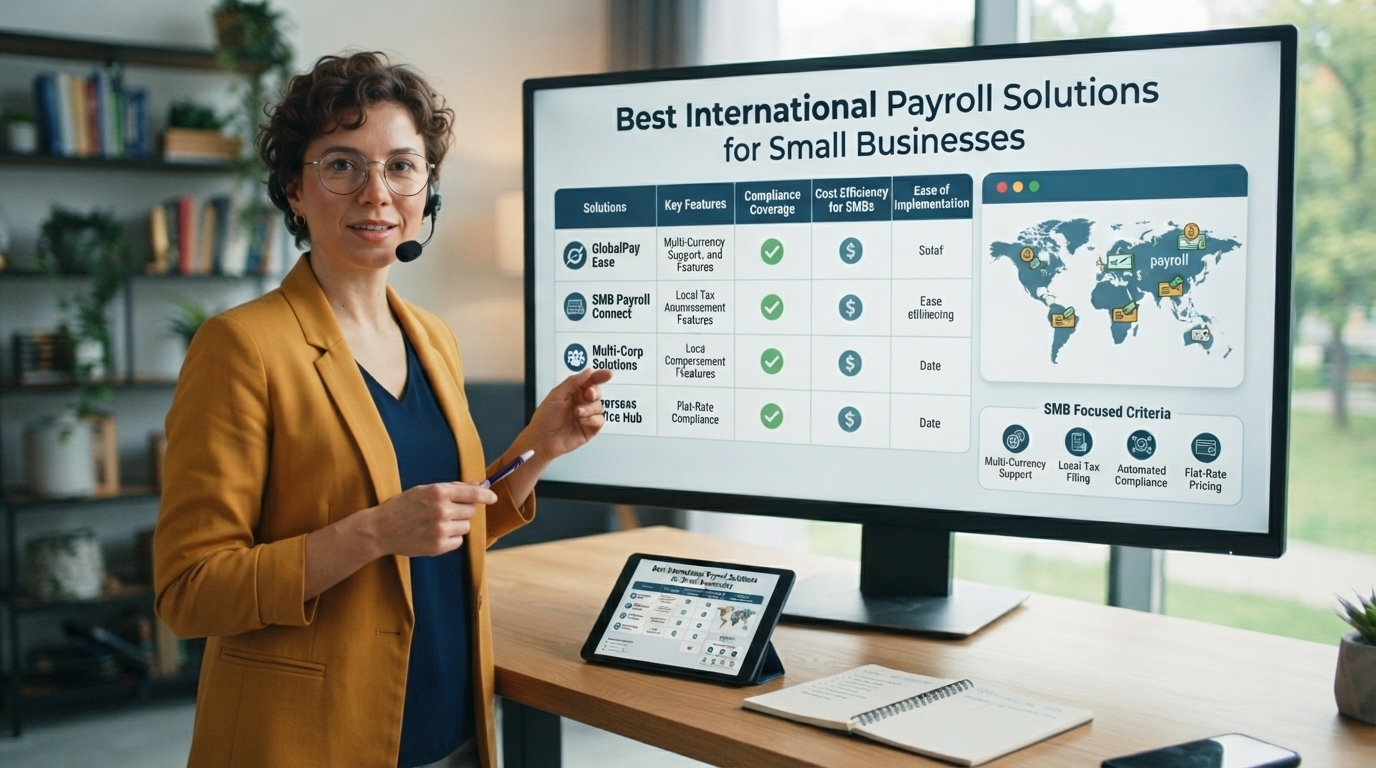
The best international payroll solutions for small businesses are often found among either all-in-one global platforms such as Deel (works in 130+ countries; $29 per month onwards), Rippling (offers great automation features; $8 per employee per month), and Remote (best rated for small business), or US-first payroll platforms with global add-ons, like Gusto and OnPay.
Thank you for reading this post, don't forget to subscribe!Thank you for reading this post, don't forget to subscribe!For truly global hiring without any presence in the local market, Oyster (works in 180+ countries) and Papaya Global should also be considered. The best option will depend on your particular needs regarding global hiring: whether you need EOR services, payroll only, or contractor payments.
CHECK OUR Construction Payroll Software
For modern small businesses, growth no longer stops at national boundaries. Whether you are hiring specialized software developers overseas, building a remote customer success team across multiple continents, or working with international independent contractors, tapping into a global talent pool unlocks massive operational advantages.
Nonetheless, international payment to employees correctly and legally is an entirely different ball game when compared with managing domestic payroll. Managing foreign currencies, labor laws, and cross-border tax withholding needs more powerful systems. Selecting appropriate international payroll solutions for small businesses is crucial to ensure you do not incur any costs due to non-compliance issues while maintaining remote teams’ satisfaction.
Why International Payroll Is Complex for Small Businesses
As soon as small businesses start building their global teams, they face many administrative and legal obstacles that normal domestic software cannot deal with:
- Local Compliance & Labor Laws: Every country has strict statutory requirements regarding paid time off, severance, employee classification, and mandatory benefits.
- Tax Withholding and Remittance: Employers must calculate and remit local income taxes and social security contributions correctly based on each jurisdiction's evolving tax code.
- Cross-Border Payments & FX Fees: Transferring funds across currencies can result in steep wire fees and unfavorable exchange rates if not optimized through dedicated payment rails.
- Worker Misclassification: Treating international employees as independent 1099 contractors when local laws view them as full-time workers can trigger severe legal penalties.
Key Features to Look for in Global Payroll Software
When evaluating platforms to manage a distributed team, small business owners should prioritize solutions offering:
- Employer of Record (EOR) Services: The ability to legally hire employees in countries where you do not have a local corporate entity.
- Multi-Currency Payouts: Support for paying staff and contractors in their local currency or stablecoins with transparent exchange rates.
- Automated Local Tax Compliance: Built-in calculation engines backed by local legal experts to ensure automatic adjustments for foreign tax laws.
- Unified Dashboards: Centralized interfaces that allow you to manage full-time W-2/equivalent international staff and freelance contractors side-by-side.
Top International Payroll Solutions for Small Businesses
Some of the best tools which cater exclusively to managing cross-border payrolls of lean companies are as follows:
1. Deel
Deel is one of the leading tools for international team management that supports payroll and compliance in more than 150 countries. It offers flexibility in the way you structure your organization, including contractor management, local payroll engines, and full Employer of Record (EOR) services. It suits smaller companies needing an ecosystem complete with round-the-clock support and automated tax calculation.
2. Remote
Remote is another excellent tool for international companies that require quick scaling and strict adherence to taxes. Remote covers global payroll, contractor management, and EOR services along with flat-rate pricing models. Its specialization in protection of intellectual property and local benefits makes it a go-to choice for rapidly growing tech and digital companies.
3. Rippling
In case of smaller companies wanting to integrate their international payroll management into a larger operational stack, Rippling presents itself as an exceptional choice. Rippling integrates global payroll, human resources management, IT management, and spending control into one dashboard. It lets you pay international employees and contractors in dozens of currencies while also automating local taxes.
Choosing the Right Platform for Your Team
The choice of the perfect payroll system for your business is dependent on the operations you run.
- In case you wish to centralize all HR, device management, and global payroll within a single platform, modular platforms will be best for you.
- If your company uses mostly freelance specialists from abroad, then contractor management systems will be suitable such as Deel Contractor and Remote Contractor.
- If your company needs to employ individuals in foreign countries where your firm has no branch, the use of EOR solutions becomes critical.
International worker misclassification occurs when a business treats an overseas worker as an independent contractor when local labor laws and tax authorities legally define them as an employee.
As a result of the fact that foreign governments apply the "substance over form" principle (which involves assessing daily operations rather than contract terms only), classification errors can lead to heavy fines, additional taxation, and obligations concerning statutory benefits.
Key Considerations Examined by Foreign Labor and Taxing Authorities.
Foreign labor departments and taxing agencies go beyond contracts and examine the real nature of the employment relationship in several important aspects:
Control over behavior: Can you control the manner, timing, and location of the work performed, or does the contractor operate independently?
Financial integration and dependence: Is the worker capable of working for other companies, or is your company the sole source of their income? Are invoices issued for certain stages of the project, or is there a fixed periodic payment?
Equipment and tools: Is the worker using his/her own hardware, software subscriptions, and workspace, or is he/she integrated into the company's IT stack?
Actionable Steps to Prevent International Misclassification
1. Utilize Country-Specific Written Agreements
- Draft localized contractor agreements that specify the scope of work, deliverables, and payment arrangements based on a particular project rather than open-ended, full-time employment.
- Clearly state that the contractor will be responsible for paying their own taxes, social security, and other insurance locally
2. Leverage Global Tech and Automated Classification Tools
- Integrate compliance platforms, like Deel or Papaya Global, that make use of local case laws and risk assessment software tools in order to identify possible misclassification during onboarding.
- Carry out regular internal audits of existing international contractors in order to prevent “drift” of their roles to full-time employee patterns.
3. Transition High-Risk Roles to an Employer of Record (EOR)
- In case a role involves full-time hours, management control, and close integration of the individual with the company’s operations, the engagement of the individual as a contractor is extremely risky.
- Use an EOR (like Remote and Oyster provide) in order to legally employ a person as a full-time employee without setting up a separate legal entity locally.
Frequently Asked Questions
What is international payroll software?
International Payroll Software is a tool which enables automated wage calculations, tax withholdings, compliance reports, and currency conversion for employees and contractors who work outside of your country of residence.
What is the difference between an EOR and global payroll software?
The EOR becomes the legal employer of workers in another country and is fully responsible for the local employment issues. The global payroll software operates on the assumption that there is a local business entity in that country.
Can small businesses hire international employees without setting up a local entity?
Yes. Small businesses are able to employ people abroad using the EOR services offered by Deel or Remote platforms.
How are international contractors paid?
International contractors get paid through wire transfer or other local clearing rails or multi-currency platform and on a regular basis in accordance with the invoices or milestones.
Are exchange rates costly when running international payroll?
There is usually a very high markup in traditional bank wires for payroll purposes. The modern approach to global payroll relies on localized clearing mechanisms and exchange rates that are fully transparent.